
Art in Italy
Artistic tradition until today
The artistic tradition is deeply rooted in Italy. Even in the Neolithic Age, the inhabitants of Italy produced artistic ornaments and artefacts. Art in Italy was properly strengthened and refined during Roman times. Many influences from different European regions and popular artists add edto the country and left Italy many still significant artistic treasures. While many regions of Italy developed independently after the fall of the Roman Empire, the Italian Renaissance marked next heyday of the art scene. Michelangelo, Raphael and Leonardo da Vinci influenced the Renaissance as Bernini and Borromini influenced the baroque Italy. For art aficionados, Italy is a paradise with an invaluable wealth of works and places.
Roman art in Italy
In Roman art, politics and art were often closely linked. Unlike the Greek art, secular values stood in the foreground of Roman art. Decorations, interiors and frescoes were more important than outside facades. However, in addition to this direction, the Roman art in Italy brought three major innovations: the art of portraits, landscape painting and the depiction of history; three art-historical achievements that were used consequently by the emperors to show off the fame and glory of their reign. Finally, the rise and acceptance of Christianity brought significant change with it, as art was put into the service of the church, which would have a decisive impact on art in Italy and Europe in the coming centuries.
 "The Feast in the House of Levi" by Veronese
Italian Renaissance: harmony and perfection
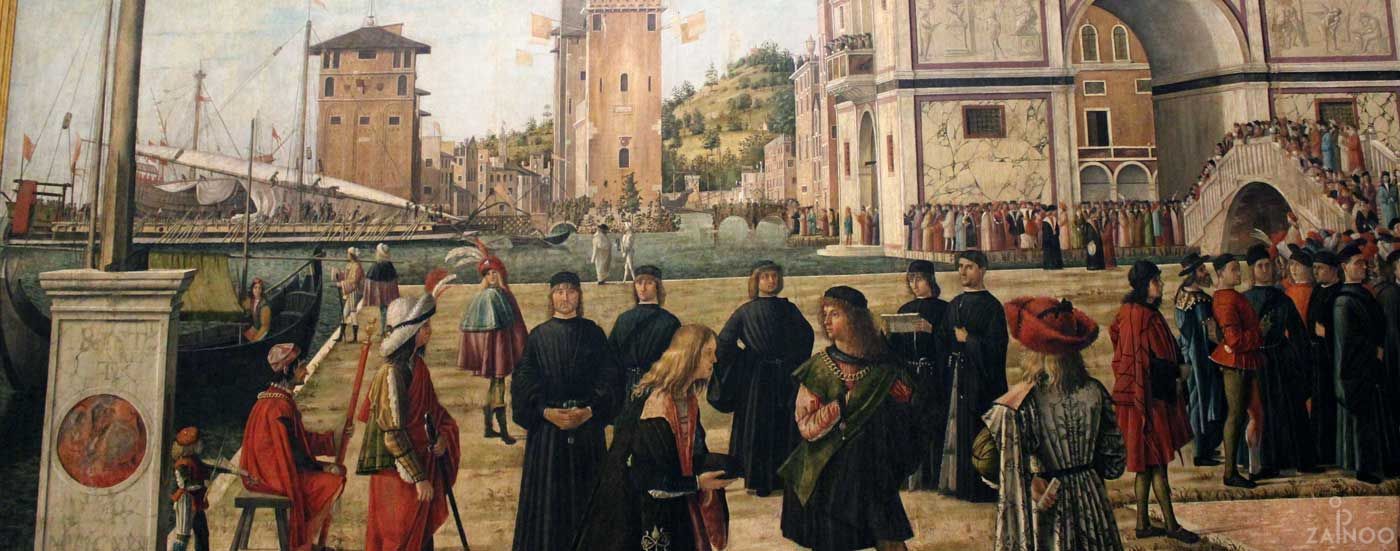
After the fall of the Roman Empire, the Roman art tradition continued to exist even beyond the Byzantine Empire. Italian city states developed into separate cultural and political centres understanding perfectly how to combine the glorious past with the present. The Romanesque and Gothic art were followed by more nature-inspired illustrations until the rediscovery of the ancient world, as the Renaissance period emerged in Italy. Starting in Florence, a new style of art dominated Italy. It received strong support from the church and from rich cities. Leonardo da Vinci (1452-1520), Michelangelo (1475-1564), Raphael (1483-1520) and Titian (1488/90-1576) marked the heyday of the Italian Renaissance and left many wonderful works that make the hearts of all aficionados of Italian art beat faster. Two artists with works as important as fascinating marked the transition to Baroque: Annibale Carracci (1560-1609) and Michelangelo Merisi da Caravaggio (1573-1610), whose works can be seen in Naples and Rome.
Rome: Italy's baroque legacy
In order to strengthen the faith and fight the spreading of Protestantism, the church used art for a special purpose. The Baroque period can therefore be regarded as an instrument of propaganda that was meant to illustrate the importance of the Catholic Church. When speaking of Baroque in Italy, Rome and the legacy of two great artists come to mind: Gianlorenzo Bernini (1598-1680) and Francesco Borromini (1599-1667). Rome owes its present appearance to these two masters. Without the architectural achievements of Borromini and Bernini's magnificent sculptures, Rome would probably be way less charming.
Modern art in Italy
Italian sculptors, painters, architects and artists had been dominating the art scene in Europe for 400 years continuously initiating new eras with their achievements. However, with the rise of nationalism and the unification of Italy, this primacy ended abruptly. At the end of the 19th leading into the 20th century, Italian artists once more caused a stir with futurism and the Pittura metafisica, the metaphysical art. However, the time of the great Italian artists who put all their skills under the service of the church was finally over. Their legacy still makes the art in Italy a central factor for tourists on their journeys through the country.
Tweet