
History of Italy
From ancient culture to European Union
Hardly any other European country experienced such extraordinary swayings during its history as Italy did. From quite early on, the Mediterranean country developed a high culture and became the first superpower: the Roman Empire. For centuries, the Romans dominated the European history because of their culture, progression and military power, and established the grounds of today's Europe. Although a long phase of ups and downs started after the decline of the Roman Empire, the powerful Italian city states and the Italian Renaissance contributed to the progress of today's civilisation in great ways.
The cradle of European civilisation
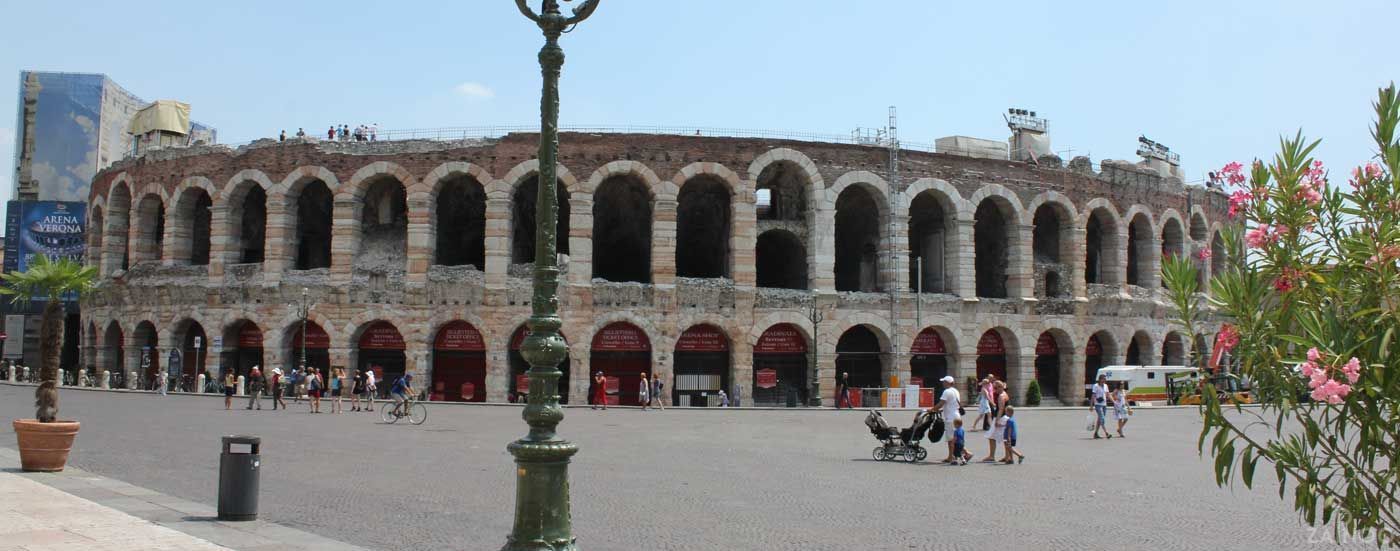
According to Roman history, the city of Rome was founded in 753 BC and became the capital of an emerging Roman Empire a bit over two centuries later. Systematically, the Romans conquered the Mediterranean area and half of Europe establishing the foundation of modern civilisation. Roman law, Catholicism, art and culture and technological progress became the cornerstorne of Italy's history and that of western civilisation.But after the disintegration of Rome and the subsequent division into a Western Roman and an Eastern Roman Empire, the heyday was over. While the Eastern Roman Empire existed until 1453, the rule of the Romans in Italy ended with the continuing invasion of foreign nations and the eventual conquest of Rome by Odoacer in 476 AD.
Colourful history: Italy in the Middle Ages
Shortly after the fall of the Roman Empire, Italy was at the mercy of the newly established European powers. Teutons, Goths and Lombards successively ruled different parts of Italy having influenced parts of the country to this day. The growing power of the papacy and the rise of the Franconians led to the destruction of the Lombardian Empire and the tripartition of Italy into a Roman-German Empire in the north, the Papal States in central Italy, and the south, which was ruled by varying powers. With the development of the bourgeoisie, city states were formed during the Investiture Controversy between the Pope and the Emperor in upper and middle Italy. These city states characterised the history of Italy up to modern times.
History of Italy: from the foundation of the state up to today
After a long depression, iItaly gained cultural and economic dominance in Europe in the 15th century for a short period of time. Italy's powerful city states were the centre of humanism and the Renaissance. However, with the discovery of America, this supremacy was lost quickly and Italy was again at the mercy of the newly emerged great powers France and Austria. Finally under Napoleon, who proclaimed the Kingdom of Italy and crowned himself king, the Italian city states were united for the first time since Roman times. With nationalism emerging, the Italian people finally rose against Austria and in 1861 eventually founded the Kingdom of Italy. But the upcoming idea of a great power ended with the First World War. Although Italy emerged as a winner, the war rushed the country into economic and social problems therefore paving the way for fascism. After the Second World War, Italy was proclaimed a parliamentary republic in 1946, and, being a founding member of the European Union, finally found its place in Europe again.
More about the history of Italy
Tweet