Italy: regions and politics
Overview of state and administration
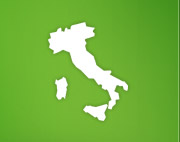
The Republic of Italy is divided into 20 regions that consist of a total of 109 provinces. 5 of these regions - Sardinia, Sicily, Trentino-Alto Adige, Aosta Valley and Friuli-Venezia Giulia - were given a special autonomous status that's based on the long history of the foundation of the state. In a situation smiliar to the one in Germany and Austrian, the president is the head of state, yet the prime minister who pulls the political strings in the country. The political landscape of Italy is highly fragmented with numerous small parties courting for political power over the country.
State and type of government
Italy has been a parliamentary democracy since 1 January 1946. It has been a founding member of the European Union ever since 1 January 1952 andis also a member of NATO and the United Nations. Italy's Head of State is the president, who has a predominantly representative role similiar to his colleagues in Germany and Austria. The country's actual political leader is the prime minister, the head of government. Italy's Parliament is divided into two chambers: the Chamber of Deputies and the Senate - both have equal rights and are responsible for the legislature.
The national flag consists of three vertical stripes: green, white, red. It was officially introduced in 1946 during the foundation of the republic, and can be traced back to the French tricolour and the Napoloenic occupation.
Politics and political landscape
The political landscape in Italy and its regions is heavily disjointed. Many small and even tiniest parties battle for national predominance. The ruling coalition usually consists of a pool of parties who have established a strategic alliance lasting until the next election. Ever since the economic boom in the 1960s, the country has suffered continuously from corruption, the mafia and helpless governments, most of which were only concerned with their own welfare. Tensions and disappointments therefore characterise the political climate in Italy still enabling strong, populist and power-hungry politicians, such as Silvio Berlusconi, to seize political power. Waiting and seeing in which direction the country and its political system will move in the future is both enthralling and tense.
Italy: regions and administration
Italy is divided into 20 regions and 109 provinces, each region having its own government. Five regions enjoy a special autonomous status, which is a result of either their special geographcal location or because of their bilingualism due to a different ethnic group living in Italy. These are the bilingual regions Trentino Alto Adige and the Aosta Valley, and the linguistically independent regions of Friuli-Venezia Giulia, Sardinia and Sicily, Italy's largest island. Beyond these five autonomous regions, the regional parliaments only have limited legislative power as they lack fiscal sovereignty and financial autonomy.
Tweet